Artificial Intelligence (AI) is no longer a distant possibility in healthcare — it is now the driving force behind a global shift toward predictive, preventive, and precision-based health systems. Machine Learning (ML), advanced data analytics, and precision technologies are transforming how we detect diseases, manage chronic conditions, monitor patients remotely, and deliver personalized medical care.
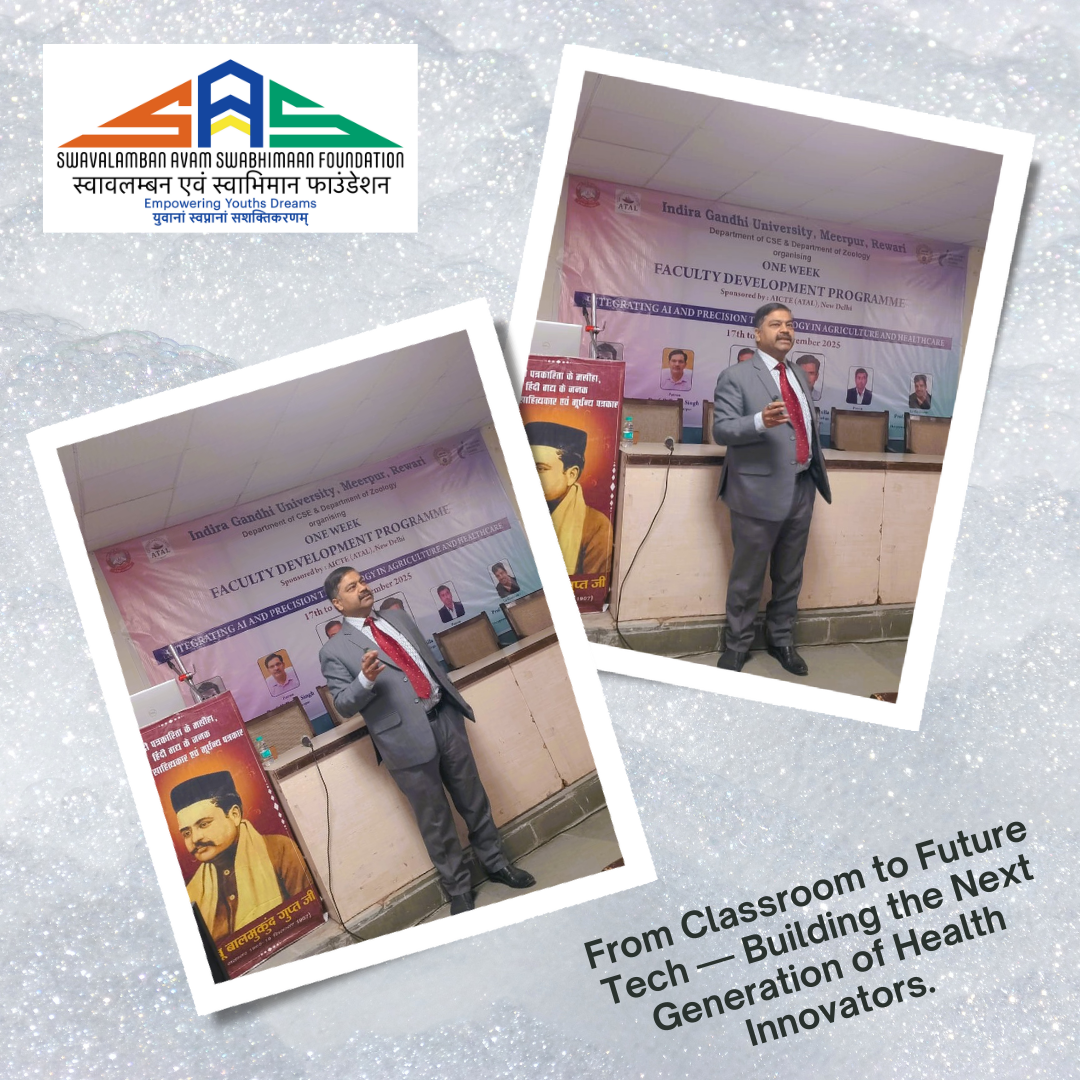
To bring this fast-evolving knowledge to academia and young innovators, Indira Gandhi University (IGU), Meerpur, Rewari recently hosted a Faculty Development Program (FDP) on the theme:
“Machine Learning and Precision Technology Uses for Health Monitoring.”
The session was delivered by Dr. Nitin Saini, Senior Consultant at Tata Consultancy Services (TCS) and Managing Trustee of SAS Foundation, who continues to work at the intersection of digital transformation, sustainability, and public-impact innovation.
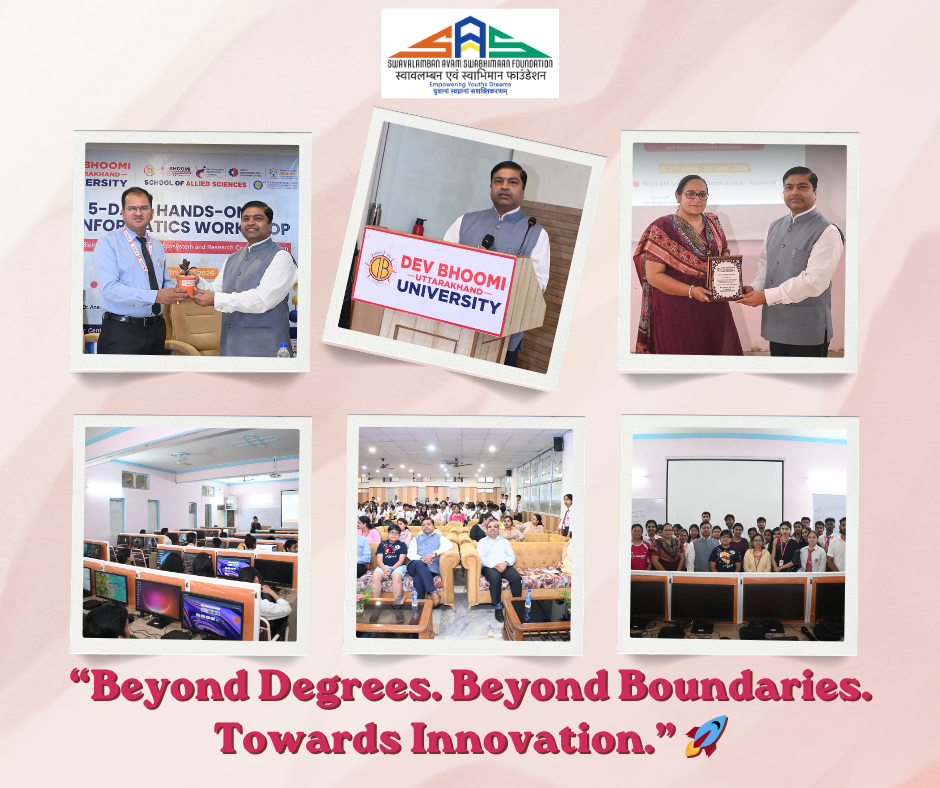
The workshop was attended by around 42 participants, including faculty, undergraduate students, and postgraduate scholars. The feedback was overwhelmingly positive, with attendees calling the session informative, industry-relevant, and thought-provoking.
This FDP followed a similar knowledge session previously delivered by Dr. Saini at NIET, Greater Noida, reflecting the growing demand among academic institutions to integrate AI and healthcare analytics into their curricula and research roadmaps.
Why This Topic Matters
Healthcare today is under pressure — rising chronic diseases, limited specialist availability, aging populations, and unequal access to care are forcing the sector to evolve. Traditional clinical models are reactive, depending on in-person visits and episodic treatment.
AI and precision technology change this.
Instead of waiting for symptoms to escalate, healthcare systems can now:
- Predict health risks early
- Monitor patients continuously
- Deliver tailored treatment plans
- Enable remote care beyond hospitals
- Improve decision-making using real-world medical data
This shift represents not just technological advancement — but a philosophical transformation from treatment-based care to intelligence-driven wellness management.
How Machine Learning Helps Enable Smarter Healthcare
Machine Learning enables systems to recognize patterns in medical data, learn from them, and support clinical decisions. Its applications are now visible across multiple domains, including:
- Medical Imaging & Diagnostics: ML models detect anomalies in scans (ECG, MRI, X-Ray) with high accuracy.
- Predictive Risk Modelling: Algorithms help identify individuals at risk of diabetes, cardiovascular diseases, stroke, or mental health deterioration.
- Personalized Medicine: Treatment regimens are optimized based on genetic markers, lifestyle data, and response patterns.
- Remote Patient Monitoring: Intelligent systems track vitals using wearable devices and alert caregivers automatically.
- Clinical Workflow Automation: ML tools support documentation, triage, and hospital resource optimization.
The Rise of Precision Technology and Connected Health
Precision health systems combine IoT devices, wearable sensors, mobile applications, and smart implants to collect real-time physiological data. These technologies are increasingly common in areas like:
- Diabetes management (CGM devices)
- Smart pacemakers and cardiac devices
- Sleep and respiratory monitoring
- Elderly fall detection systems
- Mental health digital therapy platforms
By capturing continuous data, precision technology eliminates blind spots — making healthcare more proactive, data-driven, and accessible even in remote or underserved regions.
Impact on India’s Healthcare Landscape
India presents a unique opportunity: a large population, rising digital adoption, and government-led healthcare digitization initiatives. AI-driven healthcare aligns closely with:
- The Ayushman Bharat Digital Mission (ABDM)
- Telemedicine expansion
- Digital health records and interoperability
- Make-in-India medical technology manufacturing
- Skill development for Industry 4.0
As India moves toward democratized digital healthcare, the need for trained professionals — clinicians, engineers, researchers, and data scientists — becomes critical.
Building Skills, Confidence, and Future-Ready Talent
The FDP at IGU Meerpur was not just a knowledge dissemination exercise — it was a step toward empowering the next generation of innovators who will drive India’s digital health revolution.
Participants walked away with:
- Awareness of real-world applications of AI in healthcare
- Understanding of emerging research and innovation areas
- Ideas for academic projects, patents, and interdisciplinary collaborations
- Clarity on ethical considerations, including fairness, privacy, and trust
- Insight into how technology can solve community health challenges
The Road Ahead
AI and precision health technologies are still evolving — but their direction is clear. The future belongs to healthcare that is:
- Predictive rather than reactive
- Personalized rather than generic
- Continuous rather than episodic
- Accessible rather than centralized
Workshops like this help accelerate the transition by building awareness, capability, and confidence among educators and future professionals.
Final Thought
The future of healthcare will not be built by technology alone — it will be built by people who understand how to use technology responsibly, ethically, and inclusively.
With continued collaboration between academia, industry, and social-impact organizations, India is well-positioned to become a global hub for AI-enabled healthcare innovation.