India stands at a pivotal moment in its sustainability journey. With rising urbanisation, increasing consumption, and growing plastic dependency, the need for responsible waste management has never been more urgent. While policies and infrastructure continue to evolve, real progress often emerges from partnerships that blend community engagement with operational transparency and on-ground efficiency.
Recognising this need, SAS Foundation and Finobadi have formally signed an MoU to launch a structured, technology-enabled, and community-driven plastic recycling ecosystem across RWAs, schools, colleges, and public institutions. This collaboration marks not just a partnership, but a committed step toward building a cleaner, circular, and environmentally responsible India.
Why This Collaboration Matters Now
Plastic waste is one of the most significant environmental challenges of our time. Despite rising awareness, a large percentage of recyclable plastic continues to end up in landfills, drains, and water bodies due to fragmented collection systems and lack of citizen engagement.
The SAS Foundation × Finobadi partnership addresses this gap through a model that is:
- Community-centric
- Transparent and fair
- Reward-driven
- Operationally robust
- Environmentally responsible
This is not just about recycling—it is about catalysing behavioural change at scale.
A Transparent and Reward-Based Collection Model
At the heart of this collaboration lies a simple yet powerful idea: make recycling accessible, transparent, and rewarding for every household.
Finobadi will ensure:
- Fair, real-time scrap rates shared in advance
- Verified weighing and transparent billing
- Instant payouts to participating residents
- Free doorstep pickup and on-ground logistics
- Rewards for top contributors through sustainable gifts
SAS Foundation will lead the mobilization by:
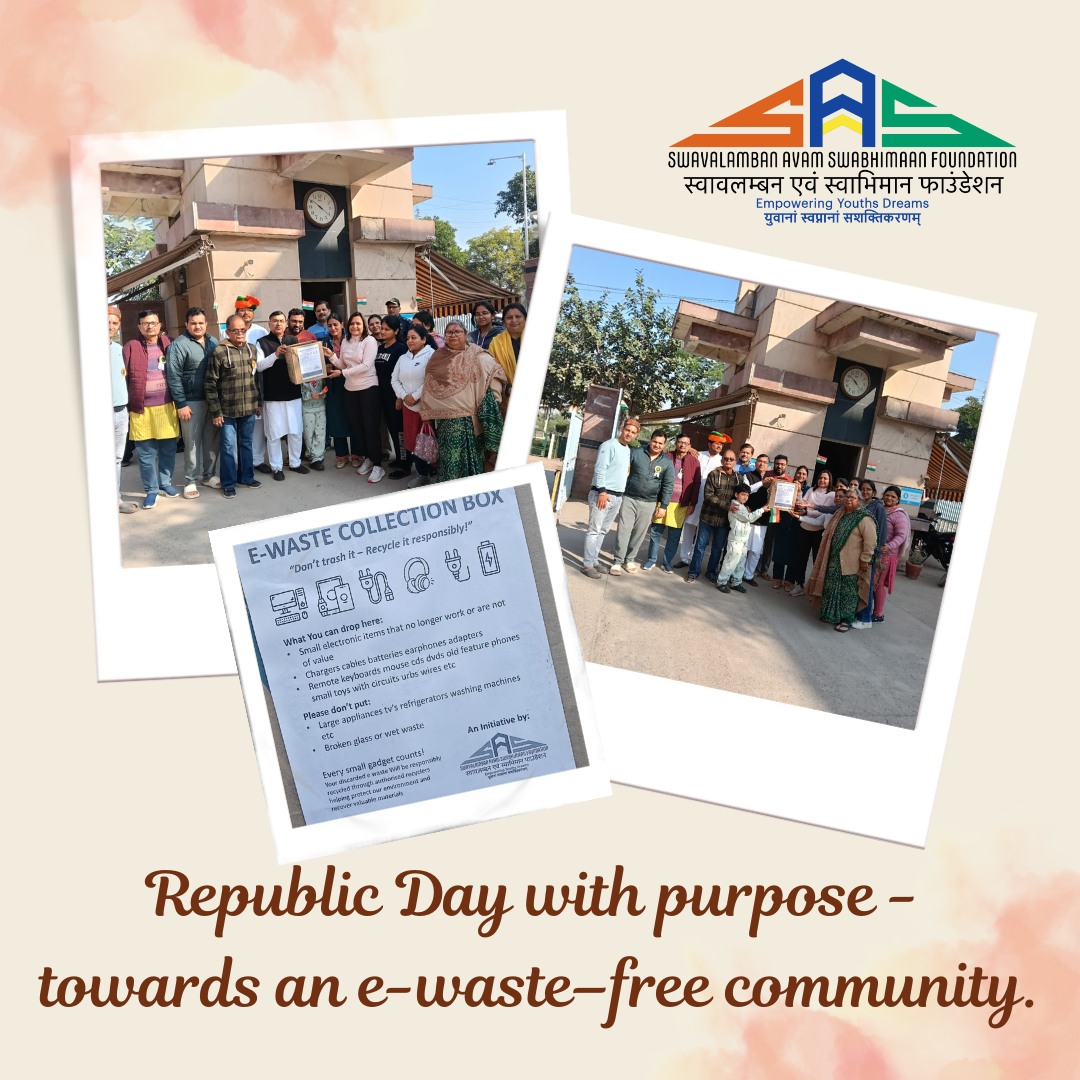
- Organizing collection drives across communities and institutions
- Creating awareness campaigns on responsible plastic disposal
- Facilitating permissions and collaboration with RWAs and educational institutions
- Strengthening outreach through digital and social platforms
Together, both partners are building a system people can trust—and more importantly, one they want to participate in.
Advancing India’s Circular Economy Framework
A circular economy thrives on closed-loop systems, where materials retain value and continuously flow through reuse and recycling. Most models fail because they ignore the critical link: citizen participation.
This partnership bridges that gap by:
- Turning households into key contributors of the recycling chain
- Ensuring plastic waste is collected responsibly and processed ethically
- Reducing landfill pressure and plastic leakage
- Creating measurable environmental outcomes at the community level
Each collection drive becomes a micro-intervention that contributes to a macro transformation.
Social, Environmental, and Economic Impact
The initiative creates multi-dimensional value:
Environmental Impact
- Reduced plastic pollution
- Improved micro-level waste segregation
- Strengthened local recycling ecosystems
Social Impact
- Increased awareness among citizens and students
- Behavioural shift toward responsible consumption
- Community involvement in sustainability missions
Economic Impact
- Fair compensation for residents
- Income generation within the recycling value chain
- Profit-sharing mechanisms to incentivise nonprofit participation
This integrated impact framework aligns strongly with UN SDGs, particularly SDG 11 (Sustainable Cities), SDG 12 (Responsible Consumption and Production), and SDG 13 (Climate Action).
A Scalable Model for Nationwide Implementation
The long-term vision of this collaboration extends far beyond individual drives. The SAS Foundation × Finobadi model can be replicated across:
- Gated communities and RWAs
- Schools, colleges, and universities
- Corporate campuses as part of CSR
- Rural clusters and panchayats
- Government-led cleanliness and sustainability missions
With the right partnerships and stakeholder engagement, this model can serve as a national template for community-led recycling.
A Collective Step Toward a Cleaner Future
Sustainability is not achieved through isolated efforts—it emerges through consistent, collaborative action. The MoU between SAS Foundation and Finobadi signifies a commitment to shared responsibility, transparent governance, and citizen-driven impact.
Every household that participates, every drive that succeeds, and every kilogram of plastic responsibly recycled contributes to a cleaner, healthier India. The path to a circular tomorrow begins with small, everyday decisions—and partnerships like this help make those decisions easier, rewarding, and meaningful.
Together, we are redefining how communities recycle, how citizens participate, and how sustainability becomes a lived reality.