

Call/Whatsapp Anytime
+91 931 243 9444
+91 965 470 9935

Send Email
contact@sas-foundation.in

Visit Office
RZ-54/5A, Rajnagar Part 2,
Palam Colony, New Delhi 110077
+91 931 243 9444
+91 965 470 9935
contact@sas-foundation.in
RZ-54/5A, Rajnagar Part 2,
Palam Colony, New Delhi 110077
In an era where every student manages multiple digital identities—emails, social media, learning platforms, banking apps—the question is no longer whether you are online, but how securely you exist online.
During Session 7 (Using a Password Manager | 25-Apr) of the Cybersecurity Awareness Internship 2026–27 by SAS Foundation, students explored a powerful yet often overlooked reality: the biggest vulnerability in cybersecurity is not technology—it is human behavior.

The Hidden Risk Behind Everyday Password Habits
Let’s start with a simple truth. Most users reuse passwords across multiple platforms. Why? Because remembering complex passwords for every account is difficult.
However, this convenience comes at a cost. A single compromised password can unlock access to multiple accounts—leading to data theft, identity misuse, and financial risk. As highlighted in the session, the rise in phishing attacks, hacking attempts, and data breaches makes weak password practices one of the most critical cybersecurity threats today.
This is where the narrative begins to shift—from memorization to management.
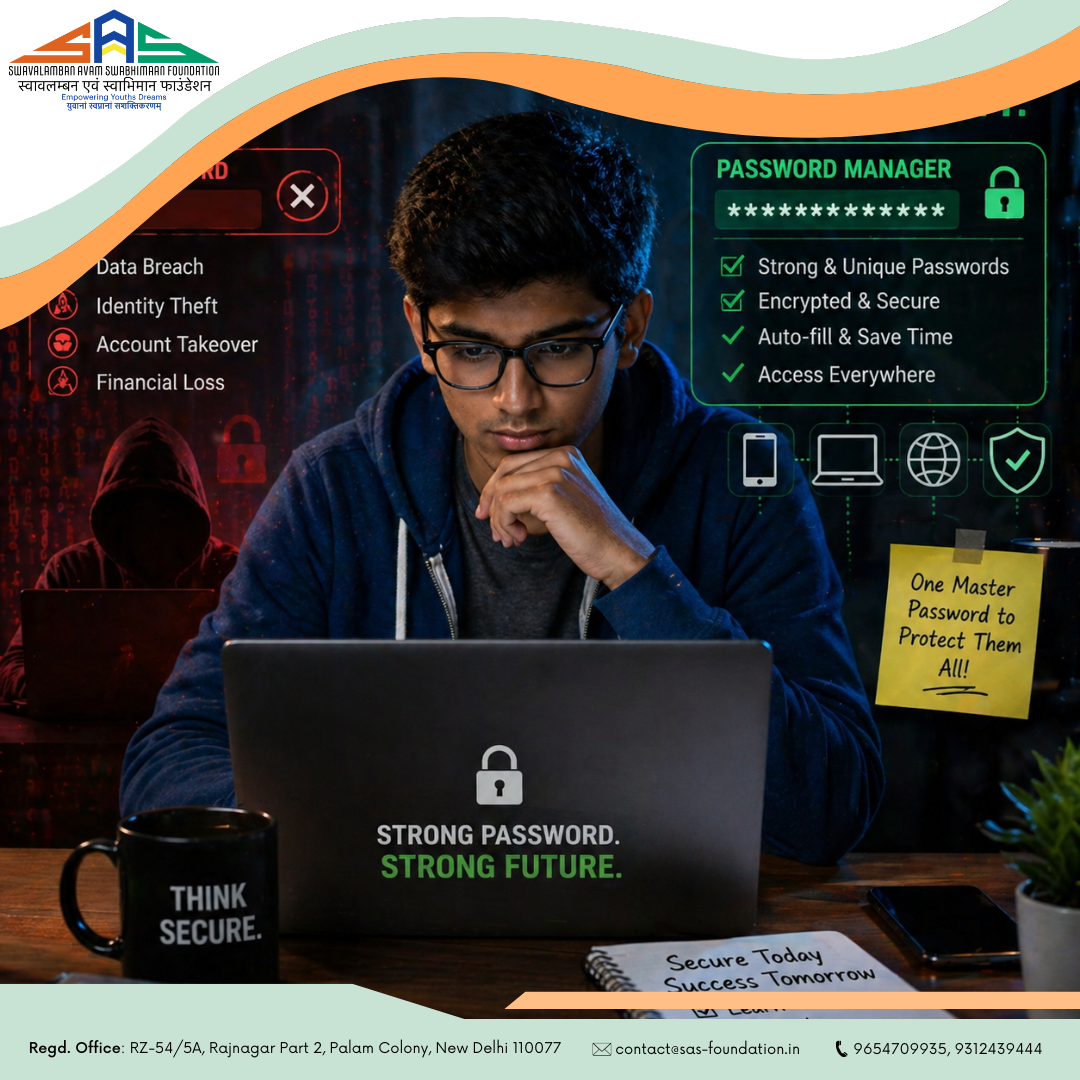
Password Managers: Simplifying Security, Strengthening Protection
A password manager is more than just a storage tool—it is a security enabler. It allows users to:
Instead of remembering dozens of passwords, users only need to remember one master password—a secure gateway to all their digital accounts.
This approach not only simplifies digital life but significantly enhances security posture.
The Technology Behind Trust: Key Security Features
Students were introduced to critical features that define a reliable password manager:
These features collectively transform password management into a robust defense mechanism against cyber threats.
From Awareness to Action: Tools and Practical Implementation
The session also introduced students to widely used password manager tools such as Bitwarden, LastPass, 1Password, and KeePass—each offering unique features suited for different user needs.
Through a live demonstration, students learned how to:
This hands-on approach ensured that learning was not just theoretical but immediately actionable.
Beyond Passwords: A Holistic Approach to Security
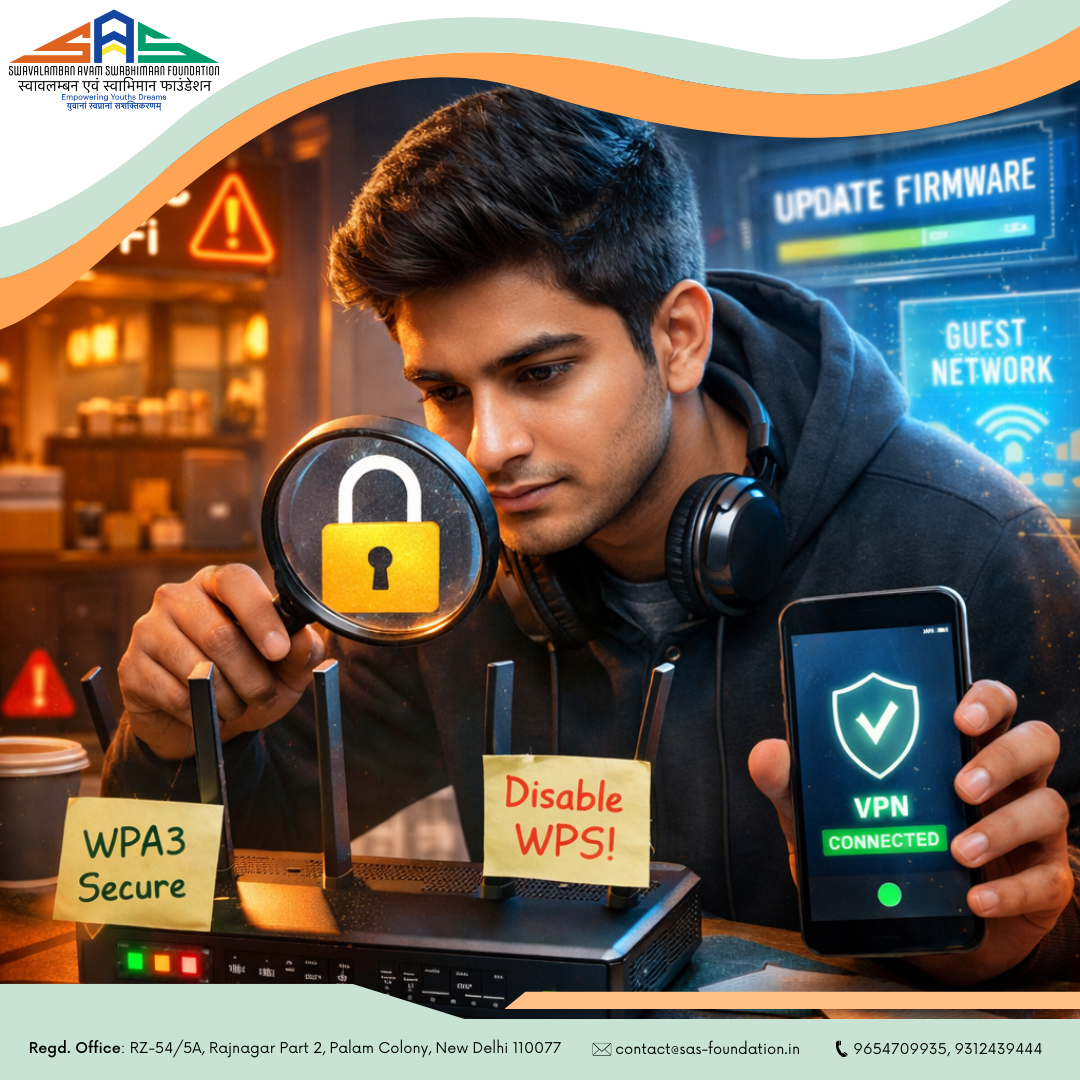
An important insight from the session was that password security alone is not enough. True cybersecurity requires a holistic approach.
Students were reminded to:
Cybersecurity is an ecosystem—and every component matters.
The Mindset Shift: From Remembering More to Managing Smartly
Perhaps the most impactful takeaway from Session 7 was a fundamental shift in thinking:
👉 Cybersecurity is not about remembering more—it’s about managing smarter.
In a digital-first world, expecting individuals—especially students—to memorize dozens of complex passwords is unrealistic. Instead, empowering them with the right tools and practices creates a more sustainable and secure approach.
Building Future-Ready, Security-Conscious Youth
At SAS Foundation, our vision extends beyond delivering knowledge. We aim to cultivate awareness, responsibility, and proactive digital behavior among youth.
Through initiatives like the Cybersecurity Awareness Internship, students are not just learning concepts—they are developing habits that will protect them for a lifetime.
As cyber threats continue to evolve, so must our approach to security. The future belongs to those who are not only digitally skilled but also digitally secure.
A Call to Action
Whether you are a student, educator, or parent, the message is clear:
Because in today’s world, your password is not just a key—it is your identity.
Conclusion
Session 7 was not just about tools—it was about transformation. It challenged students to rethink their digital habits and adopt smarter, more secure practices.
And that is how we move from awareness to action… and from vulnerability to resilience.
👉 Stay secure. Stay aware. Stay empowered.