
SAS Foundation Assistant
Palam, New Delhi · Education · Health · Environment
Answers are AI-generated and may be inaccurate — for official confirmation, contact SAS Foundation directly.

+91 931 243 9444
+91 965 470 9935

contact@sas-foundation.in

RZ-54/5A, Rajnagar Part 2,
Palam Colony, New Delhi 110077
For the last two years, the forward-thinking residential societies of Sector 76, Faridabad have demonstrated an inspiring commitment to responsible e-waste recycling. Through continuous local awareness drives and door-to-door community engagement, neighborhoods here have proved that environmental stewardship does not have to wait for large-scale government programs—it begins directly at home and grows through collective civic action.
During these frequent neighborhood collection drives, a recurring request emerged from the local residents: “Can we have a small, permanently accessible collection box right inside our society so we don’t have to store dangerous electronic waste at home for months?” This simple citizen insight became the immediate catalyst for a scalable, community-owned solution under the new SAS Foundation e-waste management operational framework.
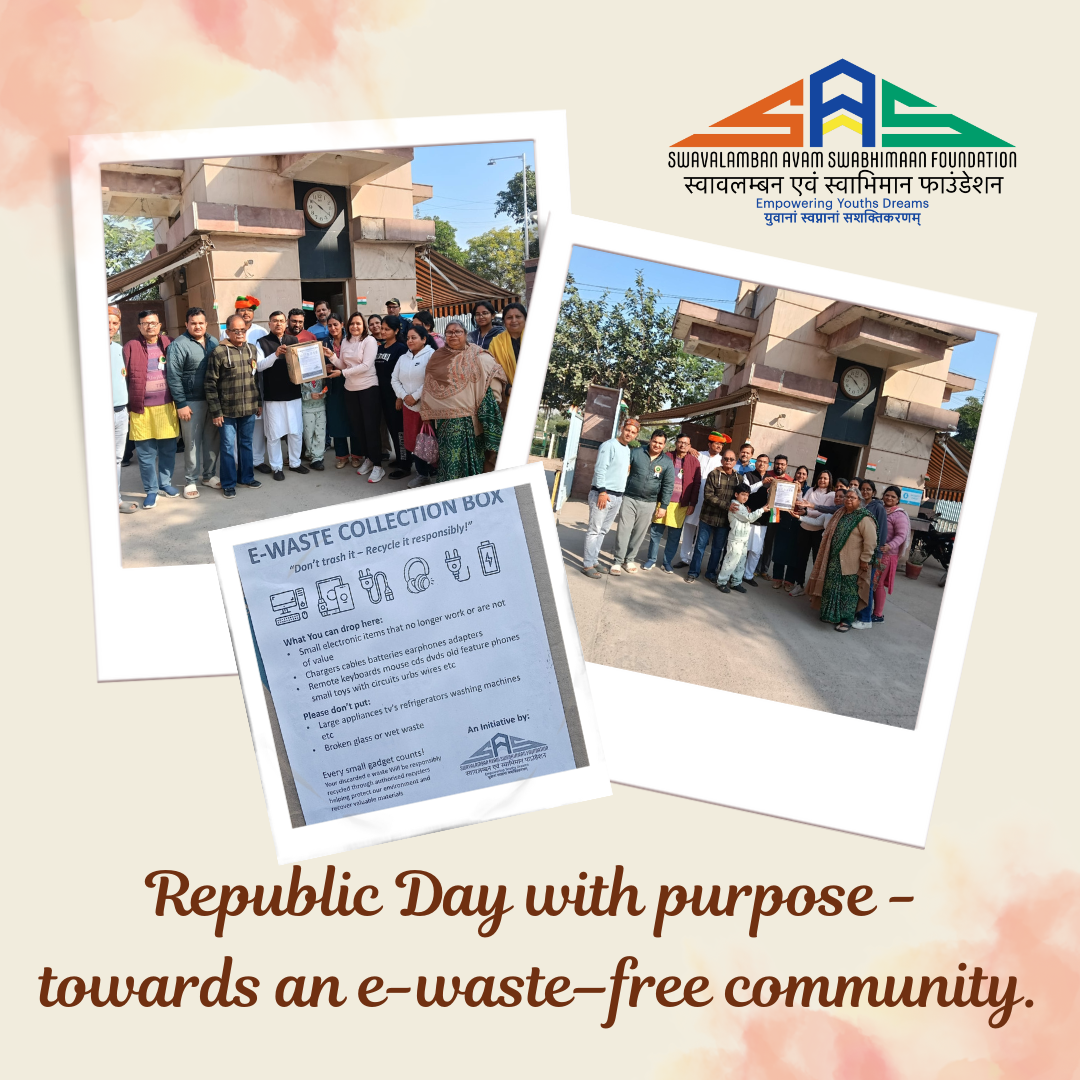
On the historic occasion of India’s 77th Republic Day, the BPTP Park Floor II RWA and its proactive residents, in close association with the SAS Foundation, successfully implemented the very first permanent E-Waste Collection Box initiative in the sector.
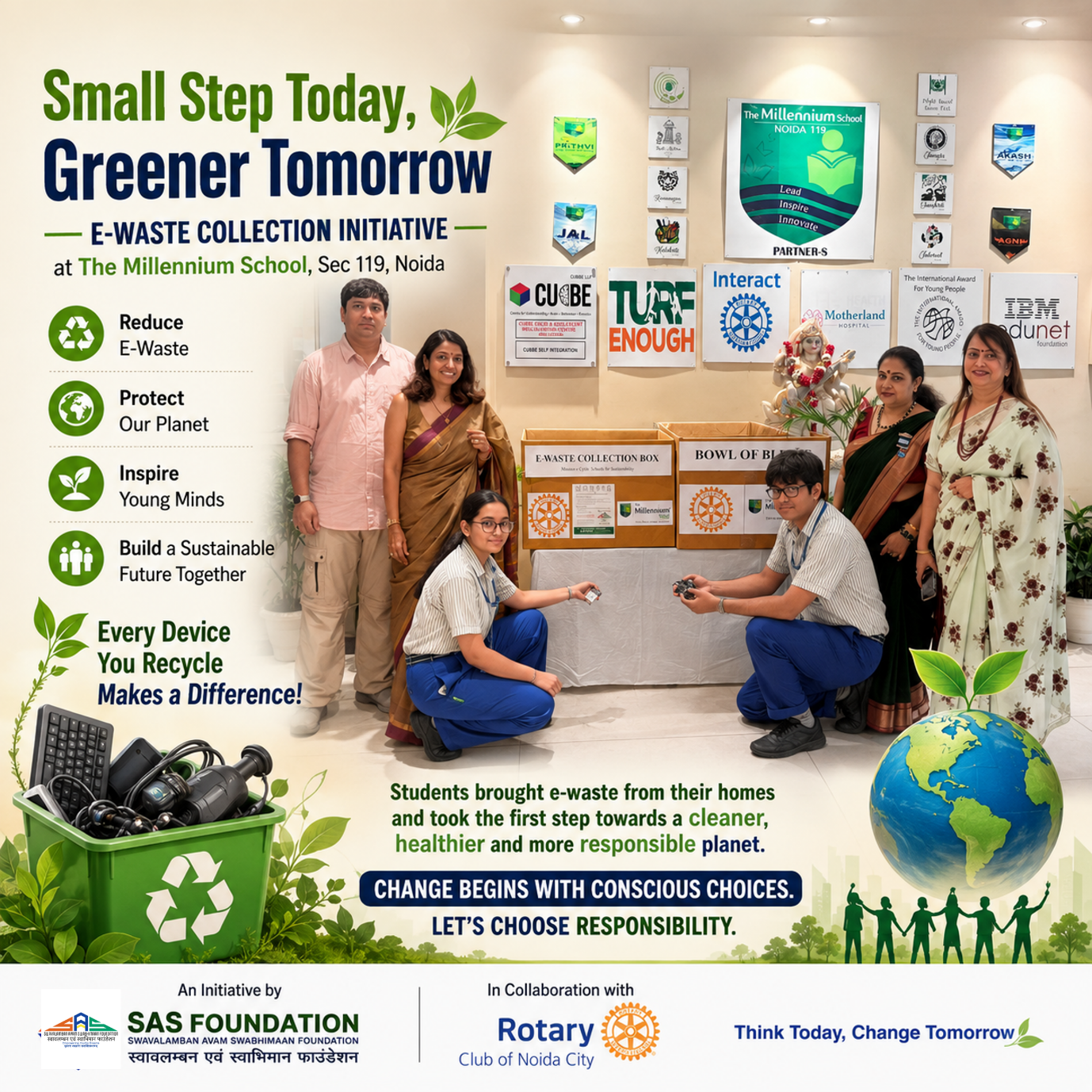
This dedicated, secure collection box allows every household to responsibly dispose of small, daily, and often overlooked electronic waste items, including:
Used household batteries and button cells
Damaged earphones and headphones
Frayed charging cables and power cords
Obsolete mobile chargers and adapters
Old USB drives and corrupt memory cards
Small electronic accessories and broken computer peripherals
+------------------------------------------------------------------------+
|                      THE SMART RECYCLING CYCLE                         |
+------------------------------------------------------------------------+
|  1. Residents drop small e-waste items into the local society box.     |
|  2. The box safely accumulates waste, eliminating home drawer clutter. |
|  3. At half-capacity, the RWA triggers an automated SAS pickup.        |
|  4. SAS Foundation segregates and recycles items in full compliance.   |
+------------------------------------------------------------------------+
This vital green initiative did not remain symbolic or limited to a single apartment complex. Multiple residential societies across Sector 76 joined hands on Republic Day to take a collective, binding environmental pledge: to transform their entire neighborhood into a fully e-waste–free urban zone.
| The Operational Blueprint | Expected Environmental & Behavioral Output |
|---|---|
| Local Box Installation | Places an accessible disposal point inside every participating RWA. |
| Continuous Education | Informs families about safe hazardous waste handling and segregation. |
| Scheduled Pickups | Clears the localized bins regularly via authorized SAS Foundation channels. |
| Data-Driven Tracking | Measures the exact volume of waste successfully diverted from local landfills. |
More societies throughout Faridabad are already actively preparing to install their dedicated bins—creating a powerful ripple effect of grassroots environmental consciousness.
Urban India faces a massive, rapidly growing challenge with hazardous consumer electronics. Small items constitute a disproportionately large share of unaccounted, toxic urban waste because they are physically hard to store, easy to forget about, and often mistakenly thrown directly into regular household trash bins.
Sector 76 is now resolving this specific behavioral gap with an elegant, citizen-led solution. This strategy highlights the true future of urban environmental management:
Decentralized Collection Systems: Locally managed, highly accessible mechanisms reduce the heavy operational dependency on overburdened municipal systems.
Deep Community Ownership: Residents become active, accountable participants—not passive observers—in direct climate action.
Data-Driven Micro-Impact: Each individual society box serves as a clean data point for tracking environmental progress, total waste reduction, and positive behavioral modification.
Highly Replicable Model: From vertical apartments to sprawling gated communities, this framework is incredibly simple for any modern RWA across India to adopt and scale.
The collaboration between the Faridabad community and the SAS Foundation demonstrates the incredible power of micro-innovation—small, targeted interventions that scale into significant regional impact. It clearly showcases how organized RWAs can lead modern sustainability movements and how direct citizen feedback can shape highly practical municipal solutions.
With the local momentum growing stronger each day, our next developmental steps are clear:

Palam, New Delhi · Education · Health · Environment
Answers are AI-generated and may be inaccurate — for official confirmation, contact SAS Foundation directly.