



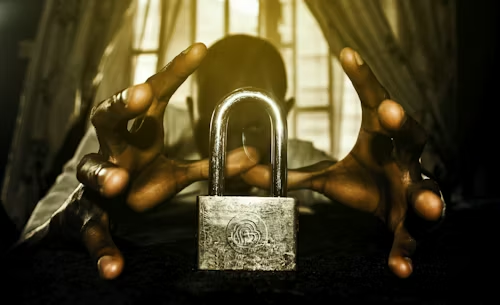
Are Your Digital Assets Safe?
A Deep Dive into Cryptocurrency Exchanges and Security
Cryptocurrency has gone from a niche tech experiment to a global financial revolution. Whether you’re trading Bitcoin over your morning coffee, investing in Ethereum for the long haul, or exploring the latest meme coin on your phone, one thing is clear: the digital asset world is here to stay.
But while the rewards can be great, the risks are just as real. Behind the buzzwords and price charts lies an urgent question that every investor, beginner or expert, must ask:
👉 Are my digital assets truly safe?
If you’ve ever paused before clicking “Buy” on a crypto exchange, or wondered if your funds could disappear in a flash due to a hack — you’re not alone. Security remains one of the most important (and often overlooked) aspects of the crypto ecosystem. In this article, let’s explore the world of cryptocurrency exchanges and the critical security measures that can protect your hard-earned investments.
First Things First: What Are Crypto Exchanges?
Crypto exchanges are like the stock markets of the digital world — they allow you to buy, sell, and trade digital currencies. They come in two main types:
-
Centralized Exchanges (CEX): Think Coinbase, Binance, or WazirX. These are run by companies, hold custody of your assets, and handle transactions on your behalf.
-
Decentralized Exchanges (DEX): Platforms like Uniswap or PancakeSwap that allow peer-to-peer trading without intermediaries. Here, you control your wallet and your funds.
CEXs are generally easier to use, especially for beginners, but they come with a catch — you’re trusting someone else to protect your money. DEXs offer more control, but also more responsibility. And no matter the platform, both face serious security threats.
Why Security Is a Big Deal in Crypto
Unlike traditional banks, there’s no helpline in crypto if something goes wrong. If your crypto is stolen, it’s often gone forever. That’s why security should never be an afterthought.
Let’s look at the most common threats:
1. Hacking
From the infamous Mt. Gox hack (which lost over $450 million in 2014) to more recent attacks on DeFi platforms, hackers are constantly targeting exchanges and wallets.
2. Phishing and Fake Apps
Scammers set up fake websites, apps, and emails that look identical to legit ones. One wrong click, and you might hand over your login details or private keys.
3. Insider Threats
Unfortunately, sometimes the problem comes from within. Employees at exchanges with access to funds or systems can misuse their power — either maliciously or due to poor internal controls.
4. Hot Wallet Vulnerabilities
Exchanges often keep some user funds in “hot wallets” — those connected to the internet. If these are not secured properly, hackers can drain them in minutes.
5. Lack of Regulation
Not all exchanges operate under the same rules. Some don’t even require KYC (Know Your Customer) verification. While this adds privacy, it can also attract illegal activity and increase the risk of sudden shutdowns or exit scams.
How the Best Exchanges Protect Your Money
Thankfully, many leading exchanges take security very seriously. Here’s what responsible platforms are doing behind the scenes:
Cold Wallet Storage
Most reputable exchanges now store 90% or more of user funds in cold wallets, which are completely offline and much harder to hack.
Two-Factor Authentication (2FA)
You’ve probably seen this already — logging in requires a password and a code from an app like Google Authenticator or SMS. It adds a second layer of protection in case your password is compromised.
Regular Security Audits
Good exchanges don’t wait for problems to arise. They bring in cybersecurity firms to test their systems for vulnerabilities before hackers do.
Insurance Funds
Some exchanges now offer insurance on user funds, especially in case of a breach. While this isn’t universal yet, it’s a promising trend.
Bug Bounty Programs
Ethical hackers can report vulnerabilities to the exchange — and get paid for it. It’s a win-win situation that helps prevent security issues before they impact users.
What Can You Do to Protect Yourself?
It’s not just about the platform — you play a big role in securing your crypto. Here are smart practices you can follow:
Use a Strong, Unique Password
Avoid “123456” or “Bitcoin2024!”. Use a password manager to generate something secure and never reuse it elsewhere.
Enable 2FA Everywhere
Seriously — not just on your exchange, but on your email and other accounts too. It only takes a few seconds but adds massive protection.
Move Large Holdings to Cold Wallets
If you’re holding significant amounts of crypto, don’t leave it all on an exchange. Consider buying a hardware wallet (like Ledger or Trezor) and moving your funds there for safekeeping.
Watch for Phishing Scams
Always double-check URLs. Bookmark your exchange. Be skeptical of emails asking you to “verify your account.”
Never Share Your Private Keys or Seed Phrase
No one — not even customer support — should ever ask for this. If someone does, it’s a scam.
Regulation: A Double-Edged Sword?
Regulation in the crypto space is growing. While some purists see it as a threat to decentralization, many investors welcome transparency and accountability.
Countries like the U.S., India, and members of the EU are now tightening rules to protect investors. Exchanges are being asked to follow KYC norms, conduct audits, and even maintain reserves. This helps reduce fraud and builds trust in the system.
The Future of Crypto Security
As the crypto world matures, new tech is making things safer:
-
AI-powered fraud detection: Algorithms can now detect suspicious trading or login patterns in real-time.
-
Multi-party computation (MPC): A cutting-edge way to split private keys so no single person has full access.
-
Smart contract audits: Critical for decentralized platforms to ensure code doesn’t have loopholes.
Add to this the rise of blockchain analytics, which helps track stolen funds, and you get a picture of a much more secure future.
Stay Informed, Stay Secure
In crypto, things move fast. New threats emerge, new tools are built, and the rules keep changing. That’s why it’s important to stay informed.
👉 Join our LinkedIn newsletter for practical insights on crypto investing, platform reviews, and the latest in blockchain security:
🔗 Subscribe here
Final Thoughts
The crypto landscape is full of promise — but it’s not without pitfalls. We hear a lot about price surges, bull runs, and the next big token. But behind all of that, security is what really determines whether your crypto journey is smooth or disastrous.
So next time you open your exchange app or plan a big investment, ask yourself:
Are my digital assets truly safe?
With the right knowledge, tools, and practices — the answer can be a confident yes.