
SAS Foundation Assistant
Palam, New Delhi · Education · Health · Environment
Answers are AI-generated and may be inaccurate — for official confirmation, contact SAS Foundation directly.

+91 931 243 9444
+91 965 470 9935

contact@sas-foundation.in

RZ-54/5A, Rajnagar Part 2,
Palam Colony, New Delhi 110077

In a world driven by digital connectivity, cybersecurity is often misunderstood as a set of tools or software solutions. Antivirus, firewalls, encryption—these terms are familiar, yet their true significance is rarely fully appreciated.
During Session 8 (Key Security Concepts | 26-Apr) of the Cybersecurity Awareness Internship 2026–27 by SAS Foundation, students explored a powerful realization: cybersecurity is not a single solution—it is a layered ecosystem powered by awareness, technology, and responsible behavior.

The Foundation of Digital Security
Every secure digital system is built on a combination of essential components working together seamlessly. This session introduced students to the core pillars of cybersecurity, helping them understand not just what these tools are, but how and why they matter.
1. Antivirus: The First Line of Defense
Antivirus software acts as a proactive shield against malware, viruses, and malicious programs. It continuously scans systems, detects threats, and prevents infections before they cause damage.
However, the effectiveness of antivirus depends on regular updates and responsible user behavior—downloading unknown files or ignoring alerts can still compromise security.
2. Firewalls: The Digital Gatekeepers
Firewalls serve as a barrier between trusted internal networks and untrusted external sources. They monitor incoming and outgoing traffic, blocking unauthorized access and ensuring that only legitimate data flows through.
Whether hardware-based (routers) or software-based (installed on devices), firewalls play a crucial role in maintaining network integrity.
3. Encryption: Protecting What Matters Most
Encryption transforms readable data into coded information, ensuring that even if data is intercepted, it remains unusable to unauthorized users.
From secure messaging apps to online banking transactions, encryption is the backbone of digital confidentiality and integrity. It ensures that sensitive information remains protected at all times.
Beyond Basics: Understanding Advanced Security Concepts
What made Session 8 truly impactful was its focus on advanced yet fascinating concepts that expand the horizon of cybersecurity understanding.
Steganography: Hidden in Plain Sight
Steganography is the art of hiding information within other files—such as embedding messages in images or audio. While it has legitimate uses like copyright protection, it also highlights how sophisticated cyber techniques can be used for covert communication.
Computer Forensics: Solving Digital Crimes
Cybersecurity is not only about prevention—it is also about investigation. Computer forensics involves identifying, preserving, analyzing, and presenting digital evidence.
This field plays a critical role in solving cybercrimes, supporting legal processes, and ensuring accountability in the digital world.
The Power of a Layered Security Approach
One of the most important takeaways from the session was the concept of defense in depth—a layered approach to cybersecurity.
No single tool can guarantee complete protection. Instead, security is achieved through the integration of multiple layers:
When combined, these layers create a resilient and secure digital environment.
The Human Factor: The Strongest and Weakest Link
Despite advancements in technology, human behavior remains the most critical factor in cybersecurity.
Students realized that:
can bypass even the most advanced security systems.
This reinforces a crucial insight:
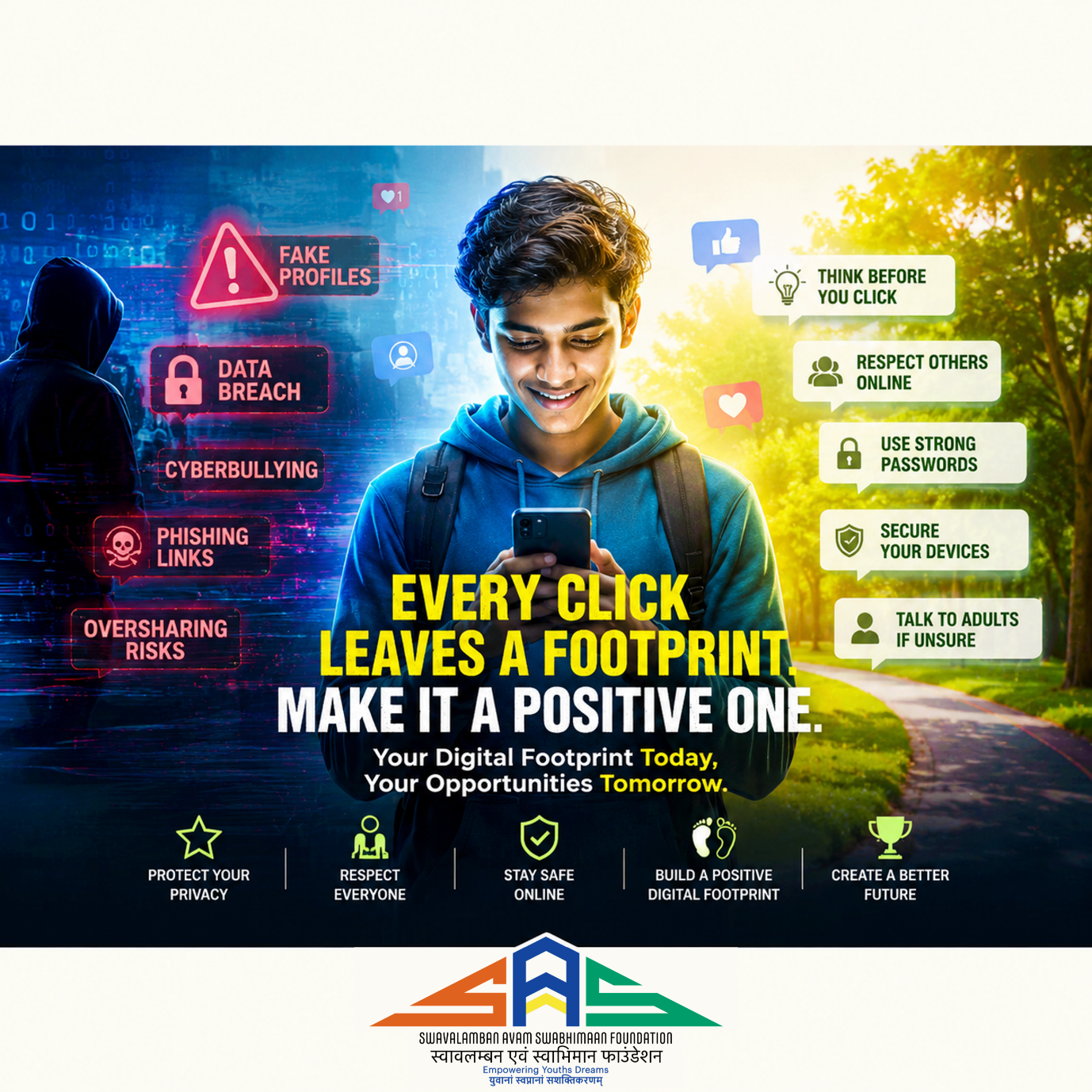
👉 Cybersecurity is not just about systems—it is about habits, awareness, and decision-making.
Preparing Youth for a Secure Digital Future
At SAS Foundation, our mission extends beyond knowledge dissemination. We aim to build a generation of digitally aware, responsible, and security-conscious individuals.
Through initiatives like the Cybersecurity Awareness Internship, students are not only learning concepts but also developing a mindset that will guide them throughout their digital lives.
As technology continues to evolve, so do cyber threats. The need of the hour is not just technical expertise but informed awareness and proactive thinking.
A Call to Action
Whether you are a student, educator, or professional, cybersecurity is a shared responsibility.
Start with simple yet powerful actions:
Because in the digital world, every action matters.
Conclusion: From Awareness to Responsibility
Session 8 was not just a learning experience—it was a mindset transformation. It empowered students to move from passive users to active defenders of their digital space.
Cybersecurity is not a destination—it is a continuous journey of learning, adapting, and staying vigilant.
👉 The future belongs to those who are not just digitally connected, but digitally secure.
Join the Movement
Be a part of the mission to build a safer digital world. Empower yourself and others with knowledge, awareness, and responsible digital practices.