
SAS Foundation Assistant
Palam, New Delhi · Education · Health · Environment
Answers are AI-generated and may be inaccurate — for official confirmation, contact SAS Foundation directly.

+91 931 243 9444
+91 965 470 9935

contact@sas-foundation.in

RZ-54/5A, Rajnagar Part 2,
Palam Colony, New Delhi 110077
Creatorpreneurs Hub Internship (Jun ’26) | Session 3 Reflection
What if your next opportunity met you online before meeting you in person?
Before someone reads your resume.
Before they attend your interview.
Before they collaborate with you.
Before they subscribe to your content.
They often see your digital identity first.
That reality formed the foundation of Session 3 of the Creatorpreneurs Hub Internship (Jun ’26) conducted by Swavalamban Avam Swabhimaan Foundation (SAS Foundation)—a session dedicated to helping young minds understand one of the most important skills of the digital era: Personal Branding.
This was not a session about becoming famous.
It was a session about becoming recognizable for the right reasons.
It was about helping students understand that every creator, entrepreneur, innovator, and future leader leaves behind a digital footprint—and that footprint should reflect authenticity, values, creativity, and purpose.

In a World Full of Profiles, What Makes You Memorable?
Every day, millions of profiles are created across platforms.
People upload photos.
Write bios.
Post content.
Build followers.
Yet only a few become memorable.
Why?
Because attention may be gained instantly—but trust is built consistently.
During the session, participants explored the idea that personal branding is the online expression of who you are.
Your personal brand is not your logo.
It is not your follower count.
It is not a filter.
Your personal brand is the combination of:
• Your values
• Your communication style
• Your visual identity
• Your interests
• Your skills
• Your consistency
Together, these elements create what the session described as a digital signature—a unique fingerprint that helps people remember you.
The Future Belongs to Authentic Creators
One of the strongest insights shared during the session was simple yet powerful:
People connect with people—not perfection.
Students reflected on how audiences today are becoming more conscious and selective. Viewers increasingly trust creators who appear genuine rather than those who imitate trends.
Authenticity has become a competitive advantage.
Participants explored four major reasons why personal branding matters:
1. Trust Creates Opportunity
People collaborate with individuals they trust.
2. Memorability Creates Visibility
A clear identity helps audiences recognize and recall your work.
3. Consistency Creates Credibility
Consistency signals seriousness and professionalism.
4. Authenticity Creates Community
People stay connected when they see real personalities behind content.
This mindset shift encouraged students to move from asking:
“How do I become popular?”
to
“How do I become valuable?”
Your Profile Is Your First Impression
The session highlighted an important reality for young creators:
Your profile often speaks before you do.
Participants learned practical techniques for creating a professional and approachable digital presence.
Key recommendations included:
Choose a Clear Profile Photo
A bright, natural, and confident image creates trust.
Keep Usernames Simple
Names should be memorable and preferably consistent across platforms.
Add Context to Identity
If names are common, combine them with interests or niches.
Examples:
• Science Explorer
• Design Guru
• Story Creator
• Tech Builder
The message was clear:
Your profile should make people curious—not confused.
Building a Brand Through Color, Fonts, and Voice
Students also discovered that branding is not only verbal—it is visual and emotional.
Every color communicates something.
Every font tells a story.
Every caption creates a feeling.
Participants explored how visual consistency strengthens recognition.
Examples discussed:
Cheerful and Energetic
Yellow, pink, white
Calm and Trustworthy
Blue, white, light gray
Creative and Bold
Purple, black
Font selection was also explored as an extension of personality.
Playful fonts for creative storytelling.
Elegant typography for artistic expression.
Clean sans-serif fonts for educational and professional content.
The insight students carried forward:
Design is not decoration. Design is communication.
Tone of Voice: The Personality Behind the Profile
Another important discussion focused on tone.
Students reflected on questions such as:
If your brand could speak, what would it sound like?
Friendly?
Creative?
Professional?
Funny?
Participants learned that tone must remain recognizable across captions, comments, videos, and conversations.
Because people remember experiences—not just content.
Consistency Is the New Superpower
One of the most powerful moments of the session was understanding consistency.
Students examined how globally recognized brands maintain identity across every touchpoint.
The same principle applies to individuals.
Matching visuals.
Aligned messaging.
Consistent usernames.
Recognizable values.
Consistency creates confidence.
When audiences repeatedly experience the same identity, trust begins to grow.
Learning from Young Creators Who Started Small
To make concepts relatable, participants explored examples of young creators who built identities through focused effort.
A young science enthusiast became known for weekend experiments.
A young design learner built credibility through visual consistency.
A book reviewer created community through honest storytelling.
Their journeys reinforced a simple lesson:
You do not need to wait to grow older to start building your identity.
You can begin today.
Tools That Empower Young Creators
Students were introduced to beginner-friendly tools that help transform ideas into polished digital experiences:
• Canva – visual design and content creation
• Adobe Express – design and creative assets
• Google Sites – simple digital portfolios
• PFP Maker and Photo Room – profile and presentation enhancement
But an important reminder remained central:
Tools do not create identity.
People do.
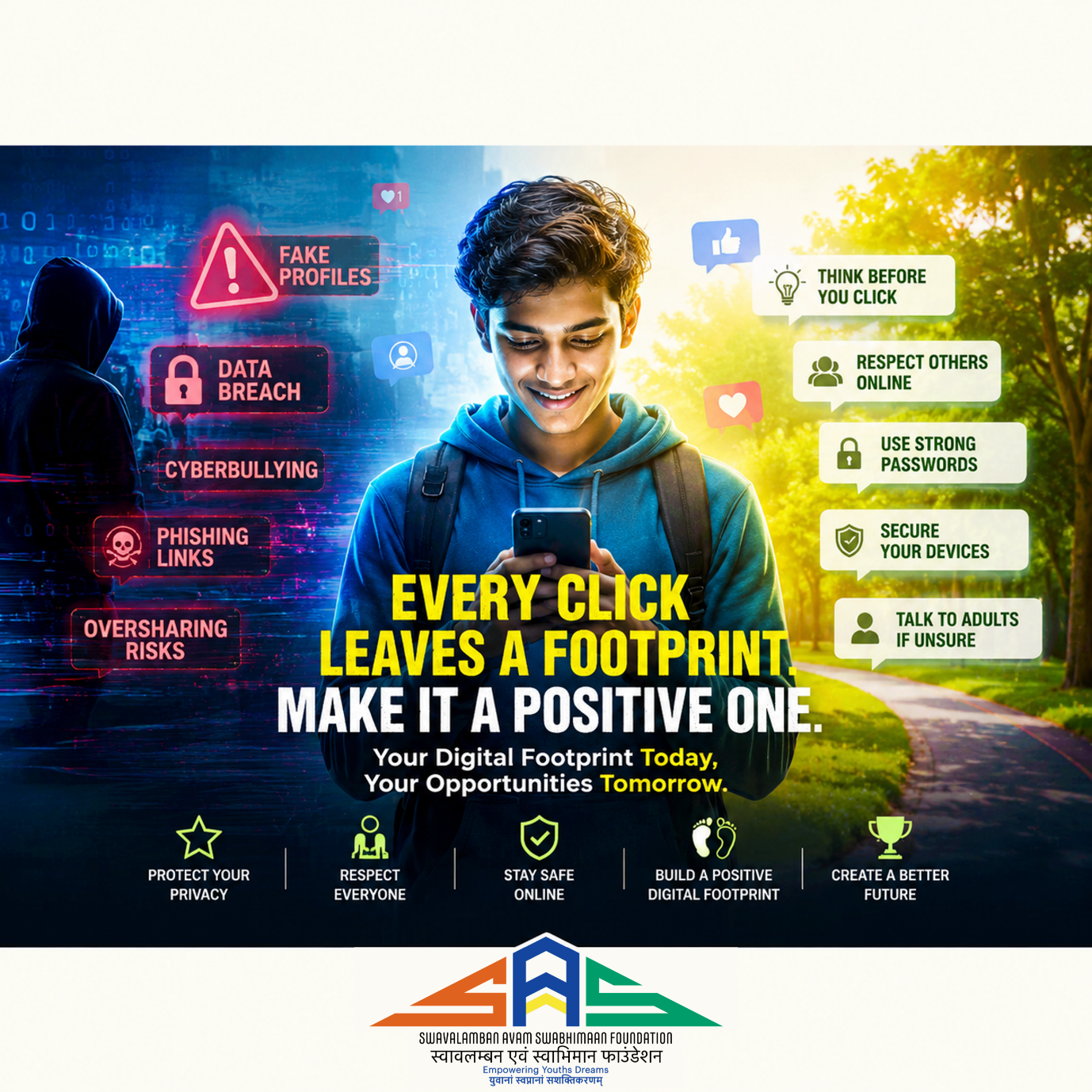
Digital Growth Must Include Digital Safety
No conversation about online presence is complete without responsibility.
Participants were reminded to:
• Protect personal information
• Seek parental guidance where appropriate
• Verify website security
• Avoid oversharing online
• Practice safe digital habits
Building a personal brand should never compromise personal safety.
Responsible creators become sustainable creators.
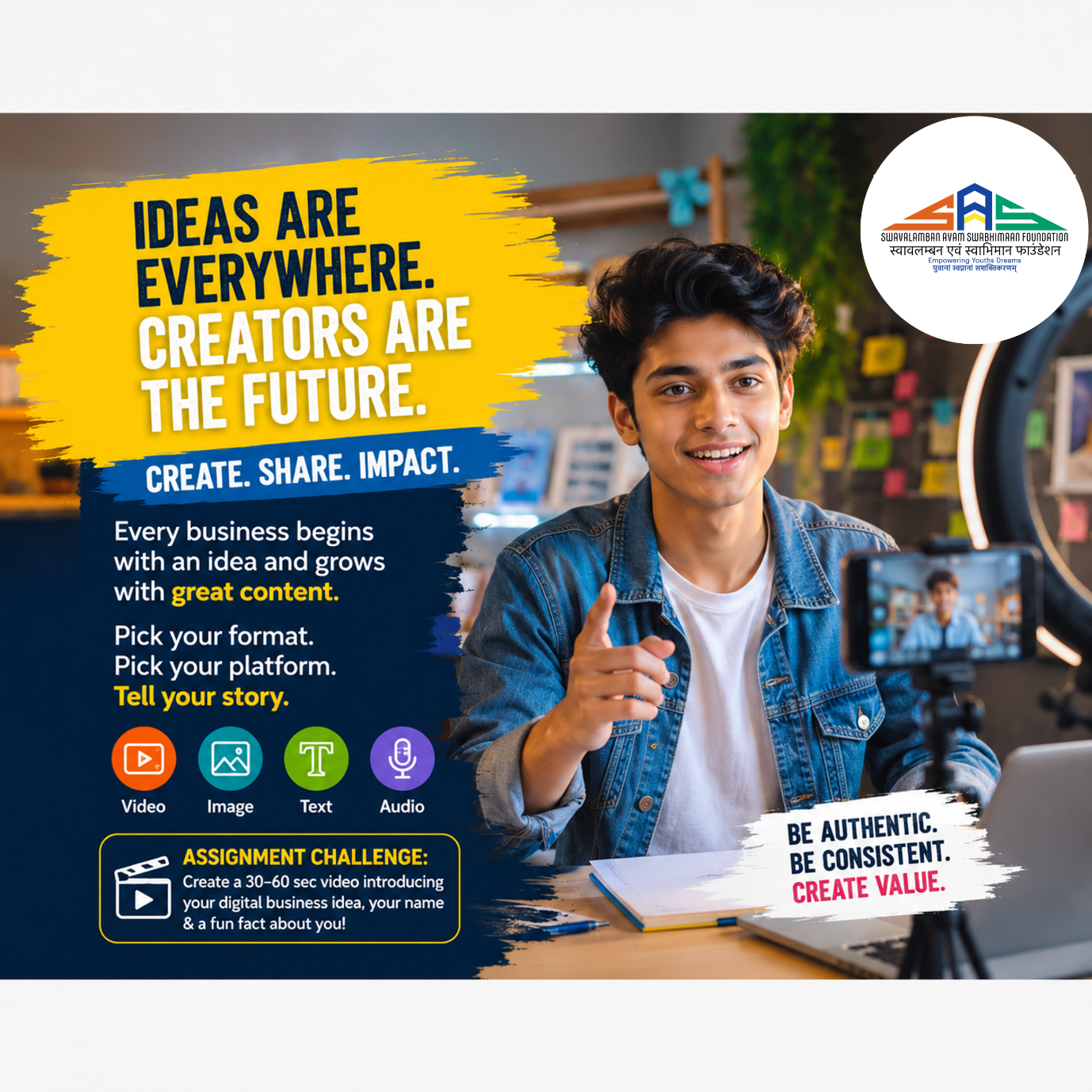
Turning Learning into Action: The Assignment Challenge
To transform ideas into practice, participants received a creative challenge.
Design a social media profile mockup for a digital business idea.
Include:
• Profile photo
• Catchy username
• Short personal bio
• Three content ideas with captions
Evaluation will focus on:
Creativity
Clarity
Consistency
The assignment is designed to help participants experience how ideas become identities.
Your Story Is Your Superpower
The session concluded with a powerful reminder:
Your personal brand is not built by copying others.
It is built by becoming more comfortable being yourself.
In a world where algorithms reward visibility, authenticity still wins attention that lasts.
At SAS Foundation, we believe youth empowerment is not only about providing opportunities—it is about helping young people discover their voice, express their identity, and build the confidence to shape their own future.
And perhaps the most exciting part—
this journey has only just begun.
Next up in Creatorpreneurs Hub Internship (Jun ’26):
Blogging & Writing Skills — because once you discover your voice, powerful words help the world hear it.
Join us in empowering youth to create, innovate, and lead.