SAS Foundation Assistant
Palam, New Delhi · Education · Health · Environment
Answers are AI-generated and may be inaccurate — for official confirmation, contact SAS Foundation directly.

+91 931 243 9444
+91 965 470 9935

contact@sas-foundation.in

RZ-54/5A, Rajnagar Part 2,
Palam Colony, New Delhi 110077
Why Building a Website Isn’t Enough Anymore
The internet has fundamentally changed how people discover businesses, communities, ideas, and opportunities. Yet, despite this transformation, one misconception continues to hold many aspiring web designers back—they believe that designing a beautiful website is the finish line.
The reality is quite different.
A successful website is not measured by how it looks on the designer’s laptop. It is measured by how effortlessly it works for every visitor, regardless of the device they use.
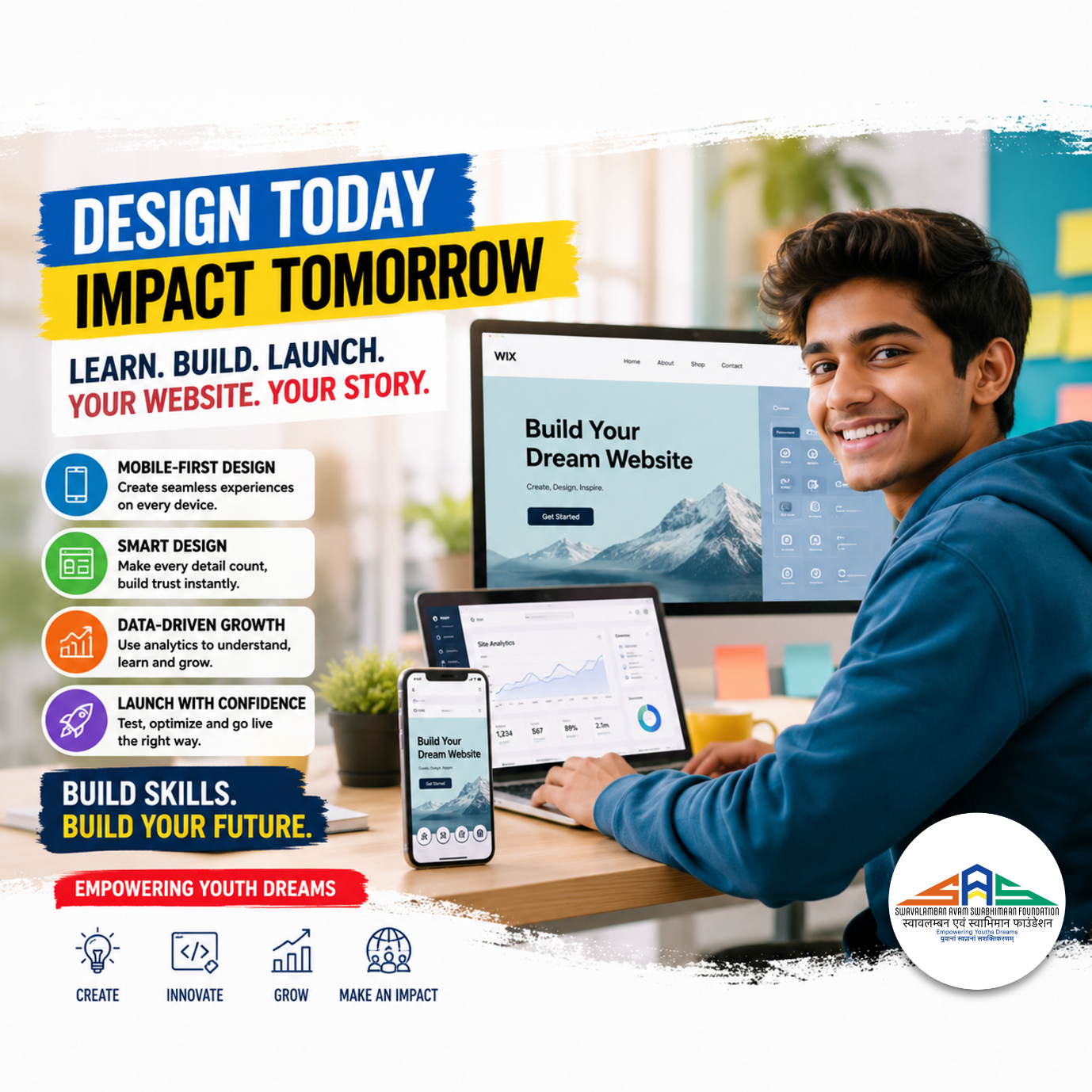
This philosophy formed the foundation of Session 6 of the Webmasters Studio Internship (Jun ’26) conducted by Swavalamban Avam Swabhimaan Foundation (SAS Foundation). The session challenged participants to think beyond visual design and embrace a mindset centered on usability, accessibility, and continuous improvement.
The Shift from Desktop-First to Mobile-First
Today, a majority of internet users access websites through smartphones. Whether someone is shopping, applying for a job, exploring educational opportunities, or supporting a social cause, the first interaction often happens on a mobile device.
This shift has redefined what quality website development means.
Students learned that a website designed exclusively for desktop screens may fail to deliver an effective experience on mobile devices. Elements that appear perfectly aligned on larger screens can overlap, become unreadable, or disrupt navigation on smaller displays.
The session introduced participants to mobile-first thinking—a design approach that prioritizes user experience across smartphones, tablets, and desktops from the very beginning of the development process.
Rather than treating mobile optimization as an afterthought, students learned that responsiveness is a fundamental component of professional website design.
Every Detail Shapes User Experience
A visitor forms an opinion about a website within seconds.
Small details often determine whether someone continues browsing or leaves immediately.
During the session, interns explored the importance of reviewing every component of a website before publishing, including:
These exercises reinforced an important lesson: excellent websites are built through thoughtful refinement rather than rapid completion.
Great Product Pages Build Trust
Creating an online store involves much more than uploading product photographs.
Students learned how effective product pages communicate confidence by providing detailed information that helps visitors make informed decisions.
Important elements include:
Comprehensive information reduces uncertainty and enhances the overall customer experience.
Whether building an e-commerce platform or showcasing community initiatives, clarity builds credibility.
Launching a Website Is the Beginning, Not the End
Many beginners believe that clicking the “Publish” button marks the completion of a website project.
Professional developers understand that publishing simply marks the beginning.
Participants explored the final stages of website deployment, including:
These steps ensure that visitors experience a reliable, secure, and trustworthy website from their very first visit.
Data Drives Better Decisions
One of the most valuable lessons from the session focused on analytics.
Every website generates insights that help creators understand visitor behavior.
Students received an introduction to how analytics can reveal:
Modern websites are no longer static brochures—they are living digital platforms that continuously evolve based on data and user feedback.
Learning to interpret website analytics enables young creators to make smarter design and business decisions.
Technology Evolves, Principles Endure
An interesting discussion compared older versions of the WIX editor with its latest interface.
Although menus and layouts may evolve over time, the core principles of effective website development remain unchanged:
This perspective encourages learners to adapt confidently as technology continues to advance.
Preparing Youth for a Digital Future
The digital economy increasingly values creators who can combine creativity with technical understanding.
Website development nurtures multiple future-ready competencies, including:
These capabilities extend far beyond web design and prepare young people for careers across industries.
At SAS Foundation, the objective is not merely to teach software tools. It is to cultivate confident digital innovators who understand how technology can create meaningful impact.
Looking Beyond Code
One of the most powerful takeaways from the session was that successful websites are built with empathy.
Designers must constantly ask:
Technology becomes valuable only when it serves people effectively.
This human-centered mindset transforms websites from collections of pages into meaningful digital experiences.
Empowering the Next Generation of Digital Creators
As industries continue their digital transformation, website development is emerging as one of the most accessible and valuable skills for students and young professionals.
By combining practical learning with real-world application, the Webmasters Studio Internship equips participants with the confidence to design, publish, and continuously improve professional websites.
More importantly, it encourages them to become creators rather than consumers of technology.
At SAS Foundation, every internship is an opportunity to nurture curiosity, creativity, and leadership. Because empowering youth with future-ready digital skills today means building stronger communities and a more innovative tomorrow.
Join SAS Foundation as a member and become part of a growing movement dedicated to empowering youth dreams through education, innovation, and digital transformation. Together, let’s build not just better websites, but a brighter future for the next generation.



Palam, New Delhi · Education · Health · Environment
Answers are AI-generated and may be inaccurate — for official confirmation, contact SAS Foundation directly.