
SAS Foundation Assistant
Palam, New Delhi · Education · Health · Environment
Answers are AI-generated and may be inaccurate — for official confirmation, contact SAS Foundation directly.

+91 931 243 9444
+91 965 470 9935

contact@sas-foundation.in

RZ-54/5A, Rajnagar Part 2,
Palam Colony, New Delhi 110077
Would You Trust a Stranger with Your Wallet? Then Why Trust an Unknown Wi-Fi Network?
Imagine a student walking into a café before an exam. While waiting for a friend, they connect to the free public Wi-Fi to check emails and access study materials. Everything seems normal. There are no warning signs, no suspicious pop-ups, and no visible danger.
A few hours later, the student discovers that their email account has been compromised. Soon after, social media accounts are hijacked, passwords stop working, and personal information is being misused.
The attacker didn’t need advanced hacking skills. The student unknowingly connected to a fake Wi-Fi hotspot designed to intercept sensitive information.
This is not science fiction. It is a growing reality in today’s hyper-connected digital world.
As millions of young people embrace online learning, digital payments, cloud applications, gaming, artificial intelligence, and social media, cyber security is no longer optional—it has become a fundamental life skill.
Recognizing this urgent need, Swavalamban Avam Swabhimaan Foundation (SAS Foundation) dedicated Session 6 of its Cyber Guardians Internship (Jun ’26) to one of the most overlooked yet critical aspects of digital safety—Wi-Fi Security and Secure Network Practices.

Why Cyber Awareness Must Begin Before Cyber Attacks
Many people believe cyber criminals only target multinational corporations, governments, or wealthy individuals.
The truth is very different.
Students often become easy targets because they:
Cyber criminals rarely attack technology first—they exploit human behavior.
The strongest firewall cannot protect poor digital decisions.
That is why cyber awareness education is becoming just as important as mathematics, science, and communication skills.
Understanding Wi-Fi: Convenience Comes with Responsibility
Wireless Fidelity, commonly known as Wi-Fi, has transformed modern life.
From online classrooms and remote work to smart homes and digital banking, wireless connectivity powers nearly everything we do.
However, every wireless connection also creates potential entry points for cyber criminals.
During the internship session, students explored how insecure Wi-Fi networks can expose:
Without proper security, attackers may intercept information silently while users continue browsing, completely unaware that their data is being stolen.
Public Wi-Fi: Free Internet Can Become an Expensive Mistake
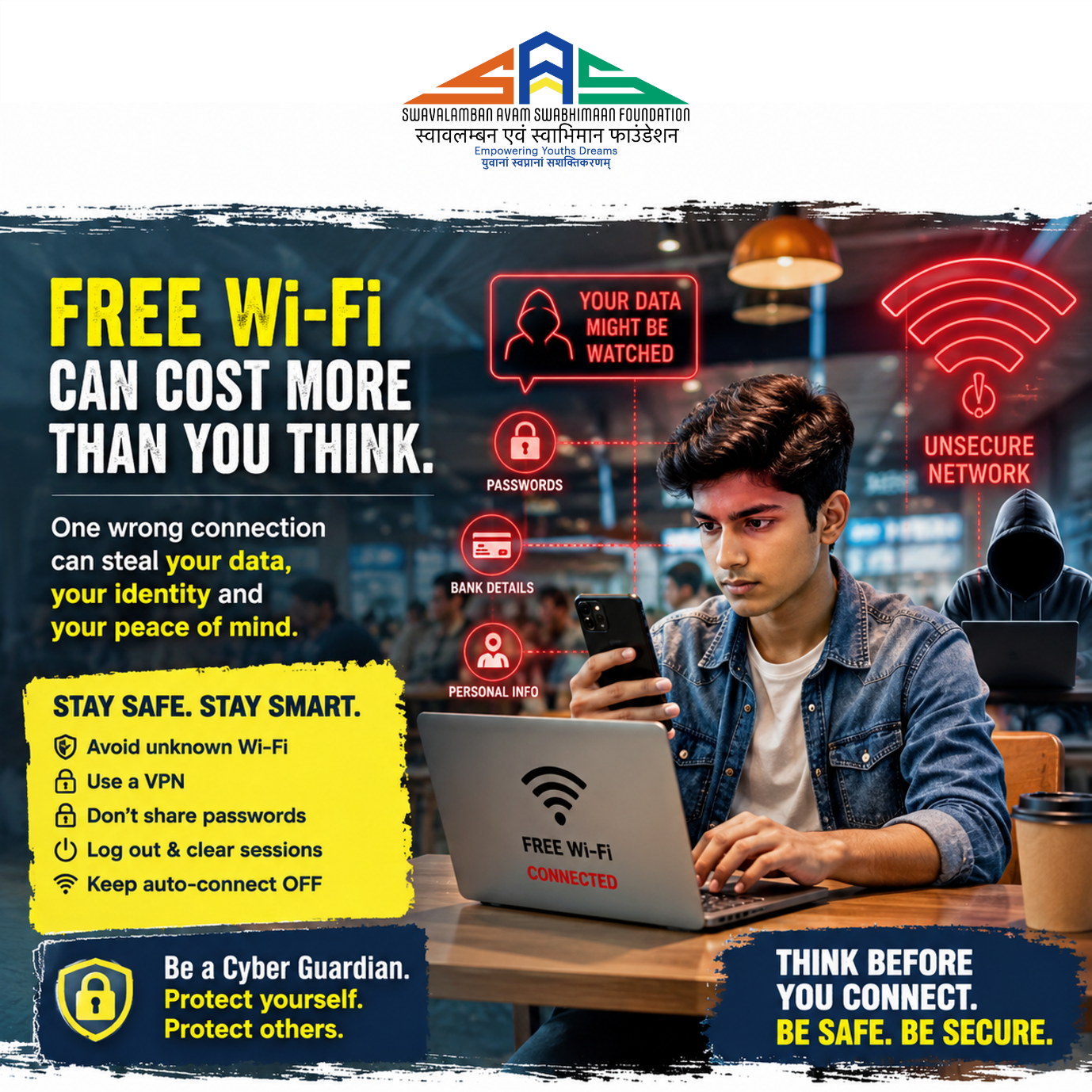
Public Wi-Fi networks in cafés, airports, shopping malls, railway stations, hotels, and public spaces offer convenience—but they also introduce significant risks.
Students learned about common cyber threats associated with public wireless networks, including:
Fake Wi-Fi Hotspots
Cyber criminals create wireless networks with names that closely resemble legitimate ones.
Unsuspecting users connect automatically, believing they are using official Wi-Fi services.
In reality, every piece of information transmitted may be monitored.
Man-in-the-Middle Attacks
Instead of communicating directly with websites, victims unknowingly communicate through an attacker.
The attacker quietly intercepts usernames, passwords, browsing activity, and confidential information.
The user often notices nothing unusual.
Malware Injection
Compromised public networks may attempt to deliver malicious software to connected devices.
Once installed, malware can steal files, monitor activity, or provide attackers with continued access.
Passwords Alone Are No Longer Enough
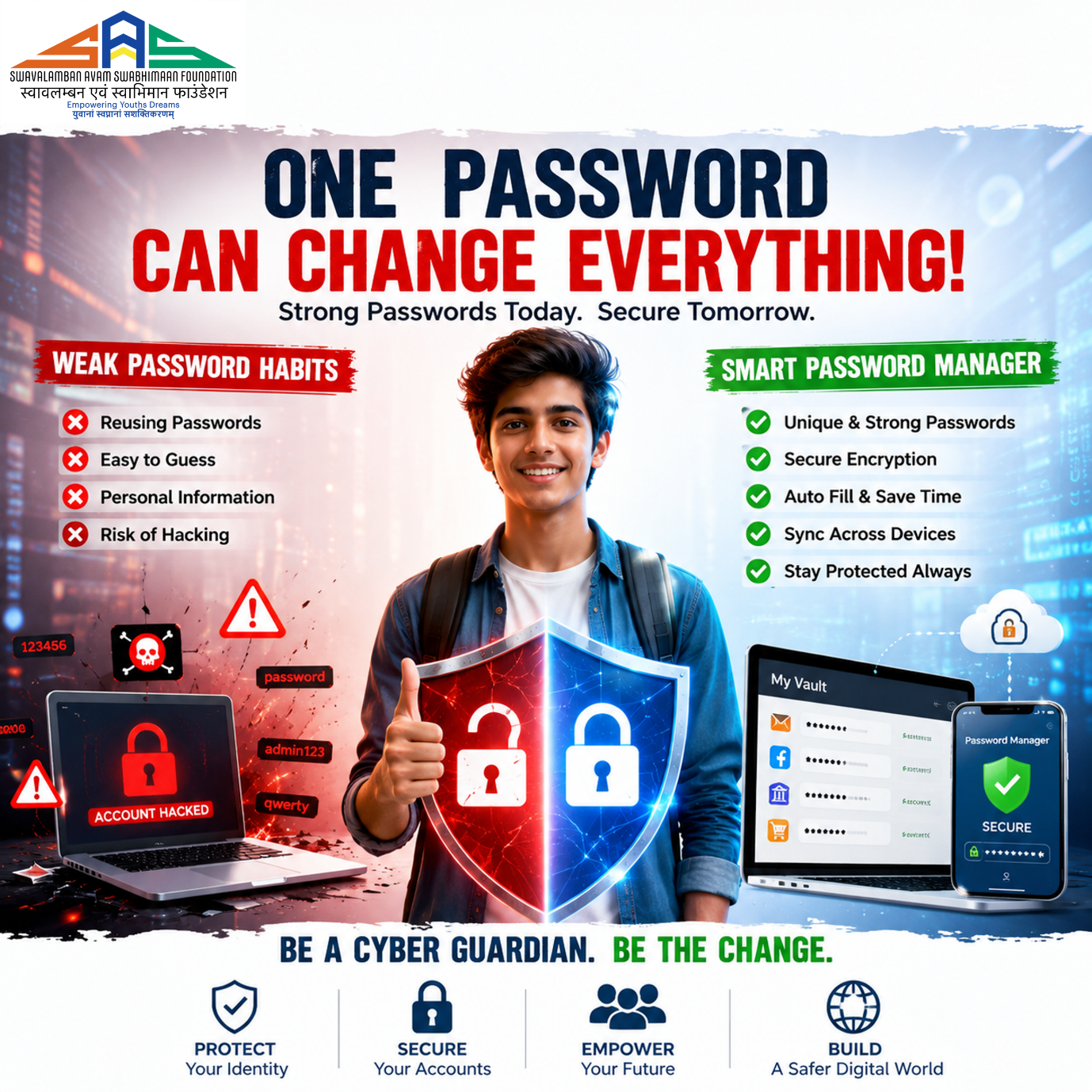
The session began by revisiting one of the most important lessons from the previous class—password hygiene.
Students reinforced several best practices:
The session also demonstrated how password managers help generate and securely organize unique passwords, significantly reducing the risk of credential stuffing attacks.
Strong passwords remain the first line of digital defense—but they work best when combined with secure online behavior.
Understanding Modern Wi-Fi Encryption
Not all wireless networks provide the same level of protection.
Students explored the evolution of Wi-Fi security standards.
WEP
One of the earliest wireless security protocols.
Today, it is considered obsolete and easily compromised.
WPA
An improvement over WEP but no longer recommended due to known weaknesses.
WPA2
Widely adopted and considerably stronger, although certain vulnerabilities have been discovered over time.
WPA3
Currently the most secure consumer Wi-Fi encryption standard.
It provides enhanced protection against password guessing attacks, stronger encryption, and improved privacy for connected users.
Understanding these standards empowers users to make informed decisions when selecting or configuring wireless networks.
Home Wi-Fi Security Starts with Simple Choices
While many people focus on protecting laptops and smartphones, they often overlook the router itself.
A poorly configured router can expose every connected device.
Students learned practical methods to strengthen home network security:
Small configuration changes can dramatically improve security.
Smart Devices Need Smart Protection
Modern homes contain numerous internet-connected devices.
Smart TVs.
Voice assistants.
Security cameras.
Smart plugs.
Gaming consoles.
Doorbells.
These devices increase convenience—but they also increase the attack surface.
Students discovered how compromised home networks can expose smart devices and potentially provide attackers with access to personal information.
Cyber security is no longer limited to computers.
It now protects entire digital ecosystems.
VPNs: Adding Another Layer of Protection
When public Wi-Fi cannot be avoided, Virtual Private Networks (VPNs) create encrypted communication channels that make data significantly harder to intercept.
The session introduced learners to trusted VPN solutions while emphasizing that VPNs should complement—not replace—good cyber hygiene.
Awareness remains the strongest defense.
Cyber Security Is About Behavior More Than Technology
Perhaps the most valuable lesson from the session was this:
Technology alone cannot keep people safe.
Safe behavior does.
Choosing not to connect to unknown Wi-Fi.
Disabling automatic network connections.
Logging out after using public systems.
Avoiding sensitive transactions on unsecured networks.
Keeping software updated.
Every small habit strengthens digital resilience.
Cyber security is ultimately a mindset.
Building a Generation of Responsible Digital Citizens
At SAS Foundation, education goes beyond academic knowledge.
The Cyber Guardians Internship equips students with practical digital skills that prepare them for higher education, future careers, entrepreneurship, and responsible citizenship.
As India accelerates toward becoming a digitally empowered nation, cyber awareness will become one of the defining competencies of the next generation.
Future leaders must not only know how to use technology—they must know how to use it responsibly.
Every informed student contributes to a safer family.
Every cyber-aware family contributes to a stronger community.
Every responsible community contributes to a more secure Digital India.
Cyber security is no longer the responsibility of experts alone.
It is the responsibility of every student, parent, educator, professional, and citizen.
SAS Foundation invites schools, colleges, volunteers, industry experts, and socially responsible organizations to join its mission of empowering youth with future-ready digital skills.
Become a member of SAS Foundation and help us create a generation that is not only digitally connected but also digitally responsible.
Together, we can build a safer internet, stronger communities, and empowered youth ready to lead the future with confidence.
Empowering Youth Dreams. Building Responsible Digital Citizens. One Student at a Time.